Back
Enterprise
Enterprise AI Assistants vs ChatGPT: What Companies Actually Need?

Tushar Dublish
There is a conversation happening in boardrooms right now. It goes something like this.
A director of operations opens ChatGPT, types a question, and gets a solid answer in seconds. They walk into the next meeting and say: "Why are we spending six figures on enterprise AI software when ChatGPT does the same thing for free?"
It's a fair question on the surface. And if you are the one being asked it, you already know the answer is complicated.
But here is the thing: most companies are struggling to explain why ChatGPT is not enough. They can feel the difference. They cannot always articulate it. And that gap between what general AI tools offer and what enterprises actually need is exactly what this post is about.
The ChatGPT Moment That Changed Everything
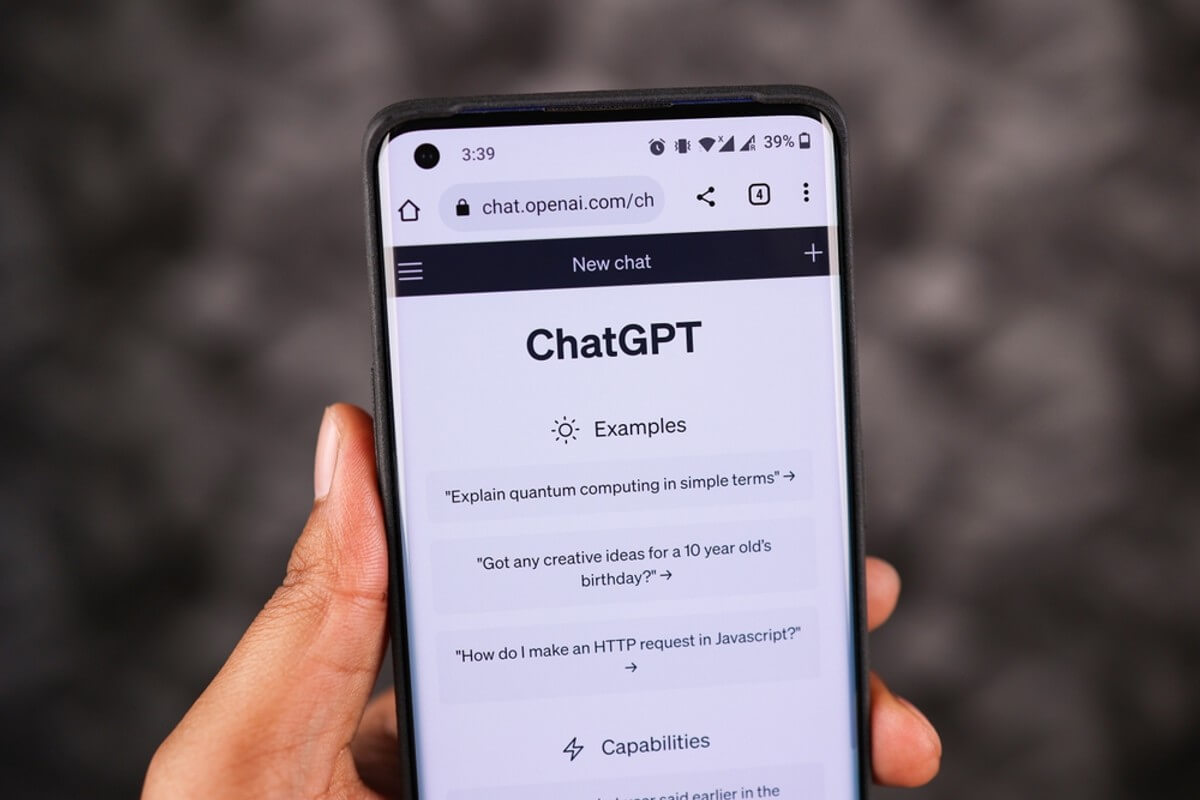
When OpenAI launched ChatGPT in late 2022, it did something remarkable. It made AI feel accessible to everyone. Suddenly, a receptionist, a software engineer, a marketing intern, and a VP of finance were all using the same tool. Asking it to summarize emails, write code, draft proposals, explain concepts.
That was genuinely transformative. It shifted how people thought about AI, from something reserved for data scientists to something any employee could pick up and use.
But here is where the story gets complicated.
Consumer AI tools are built for general use. They are designed to handle a wide range of questions from many people. They are trained on public internet data, optimized for broad knowledge, and designed for individual productivity.
Enterprise AI environments are none of those things.
Companies have proprietary data. Confidential client records. Internal processes no outsider knows about. Regulatory obligations. Security requirements. Role-specific access controls. Thousands of employees with different workflows, different tools, and different knowledge needs.
And when you try to fit a general-purpose AI into that environment, the cracks start to show fast.
What ChatGPT Actually Gives You
To be fair, let's give ChatGPT its due.
It is genuinely excellent at a wide range of tasks. Writing, editing, brainstorming, summarizing public information, explaining concepts, generating code, and handling creative work—it handles all of these well.
For individual productivity, it is one of the most powerful tools available today. An employee who learns to use it effectively can move significantly faster on writing tasks, research, and problem-solving.
That is real value. And no serious enterprise AI vendor should try to dismiss it.
But here is what ChatGPT cannot do by default: It does not know your company.
Ask ChatGPT about your Q3 pipeline. It cannot answer. Ask it to summarize the notes from last Tuesday's product planning call. It does not have them. Ask it to find the latest version of your enterprise security policy document. It has no idea that the document exists.
ChatGPT operates purely from its training data and whatever you paste into the chat window. That means every conversation starts from zero. It has no memory of your organization, your clients, your products, your internal processes, or your team's accumulated knowledge.
For individual tasks that do not require company context, that is fine. For enterprise workflows, it is a dealbreaker.
The Core Problem: Enterprise Knowledge Is Everywhere and Nowhere
Here is a scenario that every knowledge worker will recognize.
You need to prepare a competitive analysis for a client proposal. You need information that you know exists somewhere inside the company. Past competitive assessments. Notes from a previous client meeting. Product specs. Pricing history. Market research someone did six months ago.
You start searching.
You check Slack. You dig through Google Drive. You ask a colleague who might remember. You open Notion. You check the shared folder in SharePoint. You send three Slack messages to different people.
An hour later, you have found some of what you need. Probably not all of it. And you are not sure which version is current.
This is not a rare experience. This is Tuesday.
Research consistently shows that knowledge workers spend somewhere between 20 and 30 percent of their working week just looking for information. Not analyzing it. Not acting on it. Just finding it. That is a massive productivity drain hiding in plain sight.
And this is the problem that enterprise AI assistants are built to solve. Not ChatGPT. Not a general-purpose chatbot. A purpose-built system that connects to your internal knowledge sources, understands your company's data, and lets employees retrieve what they need through a simple conversation.

Enterprise AI Assistants: A Different Category Entirely
It helps to understand that enterprise AI assistants are not a smarter version of ChatGPT. They are a fundamentally different category of tool.
ChatGPT is a generative AI model. Its core capability is generating text based on its training. It is reactive; you give it input, and it produces output.
An enterprise AI assistant is an intelligence layer. Its core capability is connecting to your organization's systems, indexing your internal knowledge, and delivering accurate, contextual answers that are grounded in your actual company data.
Think of it this way. ChatGPT is like a highly educated consultant who knows a great deal about the world but has never set foot inside your company. An enterprise AI assistant is like a colleague who has read every document your company has ever produced, attended every meeting, and remembers everything, and can surface exactly the right insight the moment you need it.
That is a fundamentally different value proposition.
Enterprise assistant platforms like ActionSync are built around this principle. Instead of giving employees one more place to generate text, they create a unified knowledge interface. Connecting to Slack, Google Drive, Notion, CRM systems, project management tools, databases, and more. So that employees can ask questions and get answers grounded in real company knowledge, in seconds.
The 7 Gaps That Actually Matter in Any Organization
When companies evaluate ChatGPT against enterprise AI assistants, these are the gaps that consistently matter most.
Gap #1: Your Company's Data vs. Public Data
ChatGPT knows the internet. Your enterprise AI assistant knows your company.
That might sound simple. But the implications are enormous. When an employee asks a question, what they almost always need is an answer grounded in internal data. Internal policies. Internal client history. Internal product documentation. Internal financial metrics.
ChatGPT cannot access any of that. At least not without you manually pasting it in. Enterprise AI assistants index, contextualize, and retrieve it automatically.
This single gap explains why employees who find ChatGPT useful for personal tasks quickly hit a wall when trying to use it for real work tasks.
Gap #2: Memory and Context
Open ChatGPT. Ask a question. Get an answer. Close the window.
Now open it again tomorrow. ChatGPT has no idea who you are or what you talked about yesterday.
This is by design. While ChatGPT can retain limited memory across past conversations, that context is still narrow and tied to chat history. It does not extend to the broader context of your work—like the files you recently accessed on Drive, the emails you received, or the discussions from your team meetings.
For individual exploration tasks, this is acceptable. For enterprise workflows, where context is continuously generated across tools and interactions, this limitation creates constant friction.
Enterprise AI assistants are designed with organizational context in mind. They understand your workspace, your role, your recent queries, and your company's evolving knowledge base. Over time, that context makes the assistant meaningfully more useful for your specific work, not just generically helpful.
Gap #3: Security and Data Governance
This one is not negotiable for most enterprise buyers.
When employees paste company data into ChatGPT, where does that data go? OpenAI has worked to address enterprise concerns, but for organizations in regulated industries (finance, healthcare, defence, legal), the risk of sensitive data leaving the company's control is simply not acceptable.
Enterprise AI assistants are built with data governance at the core. Role-based access controls. Private deployment options. Encryption in transit and at rest. Audit logging. Compliance frameworks.
Action Sync, for example, is designed with data ownership as a first principle. This means your company's data stays in your control, not in a shared training pool. That distinction matters enormously to IT teams, legal teams, and boards. General-purpose AI tools rarely satisfy enterprise security requirements out of the box.
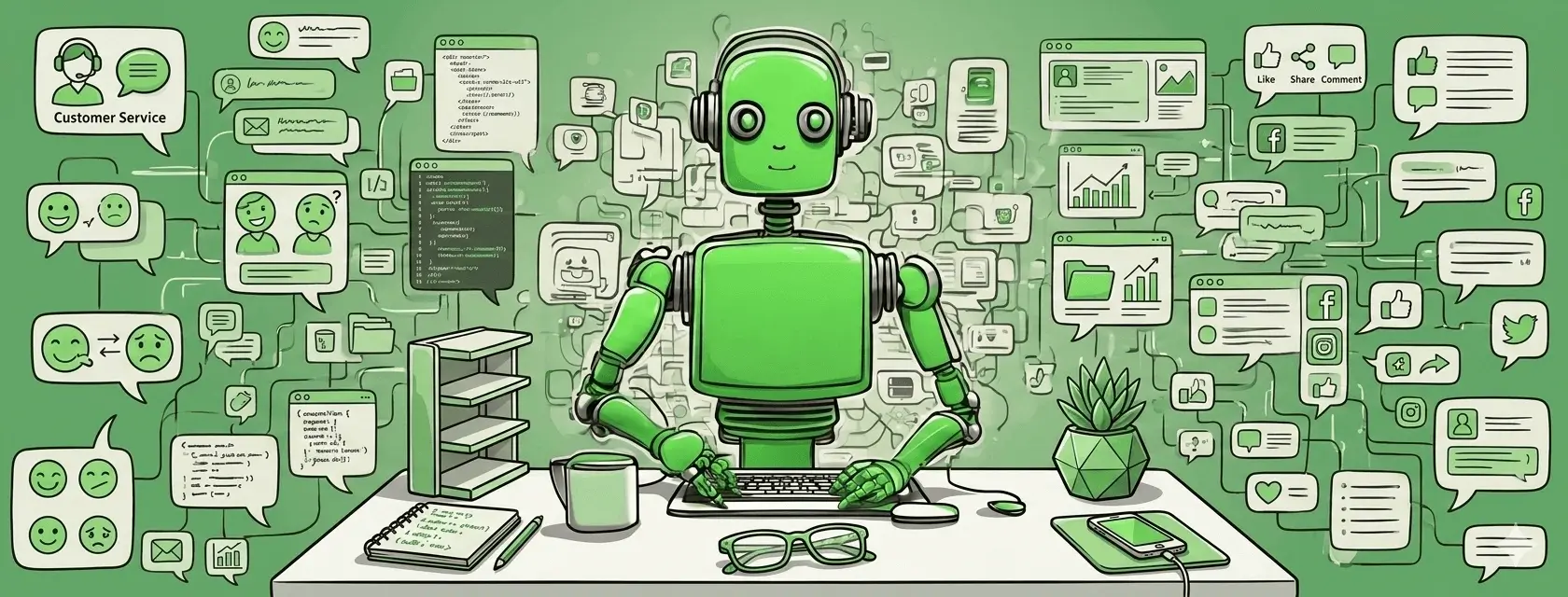
Further, here are a few AI assistant examples for enterprise businesses.
Gap #4: Integration With the Tools You Already Use
ChatGPT exists in its own window. Your enterprise lives across dozens of tools.
Slack. Jira. Salesforce. Google Drive. Notion. SharePoint. Confluence. HubSpot. Linear. Airtable. Zendesk. The average mid-sized company uses between 40 and 80 SaaS tools. Employees context-switch between them constantly, losing time and momentum with every jump.
Enterprise AI assistants integrate directly with these tools. They pull information from across your stack, understand what is happening in each system, and deliver a unified view through a single interface.
The result is not just faster information retrieval. It is a fundamentally different way of working. This is where the AI comes to where work is happening rather than forcing employees to move to where the AI is.
Gap #5: Accuracy Grounded in Real Sources
ChatGPT sometimes makes things up. This is a known limitation of large language models. They can generate plausible-sounding responses that are factually incorrect. In the AI world, this is called hallucination.
For casual use cases, this is manageable. You double-check important facts. You treat the output as a starting point.
For enterprise decisions, it is a serious risk.
When a sales rep asks about a client's contract history, they need the right answer. When an HR manager asks about leave policy for a specific jurisdiction, they need the correct policy. When an executive asks for the latest revenue number from a specific project, they need the actual figure.
Enterprise AI assistants address this through retrieval-augmented generation. It is pulling answers directly from your indexed internal documents rather than generating them from model weights alone. The difference is answers that are grounded in your actual company data, with citations you can verify.
Gap #6: Workflow Execution, Not Just Text Generation
ChatGPT generates text. That is its primary function.
Enterprise AI assistants can execute across workflows.
Drafting a meeting summary is useful. But what if the assistant could also automatically create follow-up tasks in your project management tool, send a summary to the relevant Slack channel, and update the CRM record with key notes from the meeting? All from a single conversation.
That shift from generation to execution is where the real productivity gains live. And it is where enterprise AI platforms are increasingly investing. They're building deeper integrations that let the assistant not just answer questions but trigger actions across the tools that power your organization.
Gap #7: Departmental and Role-Based Intelligence
Your sales team needs different information than your engineering team. Your finance team operates under different compliance constraints than your marketing team. Your customer support team has different workflows from your HR team.
ChatGPT is one interface for everyone. It has no concept of who you are, what department you work in, or what information you are authorized to see.
Enterprise AI assistants can be configured with department-specific knowledge, role-based access controls, and workspace models that adapt the experience to the user. A sales rep gets relevant deal intelligence. An engineer gets technical documentation. An HR manager gets policy and compliance information. Everyone gets exactly what they need and nothing they should not have access to. Here are a few enterprise assistant best practices you must account for.
The "But We Can Just Use ChatGPT Enterprise" Objection
A common response to all of the above is: "But OpenAI has a ChatGPT Enterprise plan. Doesn't that solve the data security problem at least?"
It does help on security. ChatGPT Enterprise offers stronger data privacy controls and does not use customer data for model training. That addresses one of the major concerns.
But it does not solve the core capability gaps.
ChatGPT Enterprise still operates from the same general-purpose model. It does not index your internal knowledge base. It does not integrate natively with your existing tools. It does not retrieve from your actual company data. It does not enforce role-based access to information.
It is a more secure version of a general-purpose tool. That is valuable. But it is not the same as an enterprise AI assistant built specifically for knowledge retrieval, workflow integration, and organizational intelligence.
The distinction is not about security tiers. It is about what the tool fundamentally does and what problem it was built to solve.
When ChatGPT Is Actually the Right Choice?
Let's be balanced here. ChatGPT remains the right tool for many tasks.
When your employees need to write, edit, brainstorm, or explore ideas, ChatGPT is excellent. When they need to understand a general concept, generate code from scratch, or draft an external communication, it works well. When the task does not require company-specific context and does not involve sensitive internal data, general-purpose AI tools are often the fastest path to a useful output.
Some organizations find the right answer is both. Enterprise AI assistants handle internal knowledge retrieval, cross-tool integration, and secure workflows. ChatGPT or similar tools handle individual productivity tasks like writing and brainstorming that do not require internal context.
The mistake is using a general-purpose tool for tasks that require internal context. Or paying for an enterprise AI platform when your needs are genuinely covered by a simpler tool.
What Companies Actually Need: 5 Questions to Ask
Before evaluating any AI tool (enterprise assistant or general-purpose), these are the questions that cut through the noise.
Does your use case require internal company knowledge?
If yes, you need a system that can connect to your data sources. ChatGPT cannot do this without manual input. Enterprise AI assistants are built for exactly this.Are there data security or compliance requirements?
If yes, you need an enterprise-grade platform with proper controls. This means role-based access, audit logging, private deployment options, and compliance certifications relevant to your industry.How many tools does your organization use, and how often do employees switch between them?
If the answer involves a long list of SaaS tools and constant context-switching, deep integration is a priority. The assistant should come to where work happens, not the other way around.Do you need answers or text generation?
There is a real difference between "help me write a proposal" and "tell me everything we know about this client." One requires good writing. The other requires access to real company data. Know which problem you are solving more often.Do you need the AI to act, or just respond?
If you want the assistant to trigger workflows, update systems, create tasks, and execute actions, not just generate text. This requires a more integrated platform (like Action Sync) than a general-purpose chat interface (like ChatGPT or Google Gemini).
What this ultimately highlights is simple: the decision is not about choosing the most powerful AI model, it is about choosing the right system for the job.
When context, security, and execution matter, general-purpose tools start to fall short. And the more complex your organization becomes, the more those gaps compound into real operational friction.
This is where enterprise AI assistants stop being a “nice to have” and start becoming foundational infrastructure.
A Real-World Scenario: One Question, Two Very Different Answers
Let's make this concrete with a scenario that plays out every day in enterprise teams.
A sales manager at a mid-sized SaaS company needs to prepare for a quarterly business review with a key account. They need to know: What has happened with this client over the last 90 days?
With ChatGPT:
The manager opens the chat. They type the client's name. ChatGPT tells them it does not have access to internal data. The manager then starts copying and pasting information from Salesforce, from email threads, from Slack messages, from support tickets.
Each piece requires a separate search. An hour later, they have a rough picture, but they are not confident they have everything, and they know they have missed things.
With an enterprise AI assistant like Action Sync:
The manager types the same question in natural language: "What's happened with [Client Name] in the last 90 days?"
The assistant pulls from the integrated CRM for deal activity, from Slack for recent conversations, from the support ticketing system for open issues, from email threads for key discussions.
Within seconds, a consolidated view appears, complete with sources the manager can click through to verify.
The insight is the same. The time to get there is not even close.
Multiply that time difference across hundreds of employees, dozens of client touchpoints, and hundreds of weekly decisions. The productivity gap compounds fast.

The Hidden Cost of Doing ‘Nothing’
One objection comes up often in enterprise AI conversations: "We are not sure the ROI justifies the investment."
This framing misses something important. The cost of not having a proper knowledge management infrastructure is not zero. It is just invisible.
Every hour an employee spends searching for information instead of using it is a cost. Every decision made on incomplete information is a cost. Every duplicated effort, when one team builds something another team has already built because they could not find it, is a cost. Every new hire who takes months to get up to speed because institutional knowledge is scattered across a dozen tools is a cost.
These costs are real. They just do not show up on an invoice. They show up as slow execution, missed opportunities, and organizational friction that compounds over time.
Enterprise AI assistants do not just add capability. They remove drag. And in fast-moving markets, that drag is often the difference between winning and losing.
What to Look For in an Enterprise AI Assistant?
If you are evaluating options, here is what actually matters.
Integration depth:
A platform is only as useful as the systems it connects to. Look for native integrations with the tools your teams use every day. Not just a list of logos on a marketing page, but real, functional connections that surface relevant context from each tool.Retrieval quality:
How well does the platform find and surface the right information? Look for semantic search capabilities, not just keyword matching. The assistant should understand what you mean, not just what you said.Data control:
Where is your data processed and stored? Does the platform offer private deployment? Who can access what? Evaluate the security architecture the same way you would evaluate any system that touches sensitive company data.User experience:
The most powerful assistant is useless if employees do not use it. Adoption depends on simplicity. Fast responses, clean interfaces, and outputs that feel natural and actionable.Permission management:
The assistant should respect the access controls you have already established. Different roles should see different information. This is not optional—it is a foundational requirement for deploying AI safely in enterprise environments.Workspace and customization:
Can the platform be configured for different teams with different needs? A single generic interface rarely serves a diverse organization well.
What this ultimately highlights is simple: the decision is not about choosing the most powerful AI model, it is about choosing the right system for the job.
When context, security, and execution matter, general-purpose tools start to fall short. And the more complex your organization becomes, the more those gaps compound into real operational friction.
This is exactly where enterprise search platforms like Action Sync come in. It turns scattered knowledge into a single, intelligent interface your teams can actually rely on. If you want to see what this looks like inside a real organization, the fastest way is to experience it firsthand.
👉 Book a FREE demo of Action Sync and see how your team can move from searching for information to actually using it, instantly.

FAQs or Frequently Asked Questions
Q. Can ChatGPT access my company's internal documents?
Not by default. ChatGPT operates from its training data and whatever you manually provide in a conversation. It has no native ability to connect to your internal systems, document repositories, or databases.
Some integrations and plugins exist, but they require custom setup and do not provide the depth of connection that purpose-built enterprise AI assistants offer natively.
Q. Is ChatGPT Enterprise the same as an enterprise AI assistant?
No. ChatGPT Enterprise improves on data privacy and security relative to the free tier. But it is still a general-purpose AI tool. It does not index your internal knowledge base, does not integrate natively with your enterprise tool stack, and does not enforce role-based access to internal information.
These are fundamentally different capabilities from what enterprise AI assistants are designed to provide.
Q. What is the main risk of using ChatGPT for enterprise tasks?
Several risks are worth noting. First, data privacy: employees may paste sensitive company information into a consumer tool without understanding the implications.
Second, accuracy: ChatGPT can generate plausible but incorrect answers, which is especially risky for business decisions.
Third, context gaps: without access to your internal data, answers will always be generic rather than grounded in your company's reality.
Q. How do I make the case internally for enterprise AI investment?
Quantify the current cost of information search. If knowledge workers spend 20 to 30 percent of their time finding information, calculate what that represents in real labor cost across your team.
Then estimate the time savings from instant information retrieval and show what employees could be doing with that recaptured time.
Tie the ROI to measurable business outcomes (faster decision-making, shorter sales cycles, reduced onboarding time) rather than abstract productivity metrics.
Q. Do enterprise AI assistants replace the need for ChatGPT entirely?
Not necessarily. Many organizations find they serve different purposes. Enterprise AI assistants handle internal knowledge retrieval, cross-tool search, and secure workflow execution.
General-purpose tools like ChatGPT handle individual tasks that do not require internal context—drafting external communications, exploring ideas, generating code.
The two can coexist productively when you are clear about which problems each one is built to solve.
Conclusion
ChatGPT is a genuinely impressive tool. It has made AI accessible to millions of people and created real value for individual productivity. There is no good argument for dismissing what it does well.
But enterprises are not individual users. They are complex systems of people, data, tools, workflows, and decisions. All interconnected, all moving at once.
General-purpose AI tools were not built for that. Enterprise AI assistants were.
The question for companies is not whether to use AI. That conversation is over. The question is which type of AI to use, for which tasks, under which conditions. And how to deploy it in a way that creates real, measurable value without introducing risk.
And the companies that answer it well are the ones building a meaningful advantage.
Not in some distant AI-enabled future. Right now.
If you're serious about turning AI from a productivity tool into a true competitive advantage, it's time to look beyond generic solutions.
👉 Book a FREE demo of Action Sync and see how your organization can unlock its collective intelligence, reduce operational drag, and make faster, better decisions—at scale.