Back
Work AI
What is Cognitive Search & How Does It Work

Tushar Dublish

There is a question that comes up in almost every fast-growing company, usually during a product meeting or a client call. Someone needs a specific piece of information. Be it a market research report, a competitor analysis, a technical spec. The document exists. Everyone knows it exists. But no one can find it in under three minutes.
This is not a filing problem. It is a search problem. And it is far more expensive than most organizations realize.
Traditional search was built for a simpler world. You typed a keyword. The system matched it to a file. Done. But the information inside organizations today does not live neatly in files with obvious names. It lives in Slack threads and sales call transcripts. In PDFs with cryptic file names. In emails where the subject line has nothing to do with the content. In meeting notes from two years ago that no one has touched since.
Keyword search was never designed to make sense of any of that.
Cognitive search was.
And increasingly, this shift is not theoretical. Enterprise AI search platforms like Action Sync are operationalizing cognitive search inside real workflows (across Slack, CRM systems, internal docs, and support tools) where most organizational knowledge actually lives.
This article explains what cognitive search actually is, how it works under the hood, what separates it from traditional search, and why the shift to AI-powered information retrieval is changing how organizations think, decide, and operate.
What Cognitive Search Actually Means?
The term gets used loosely. Let's pin it down.
Cognitive search is a class of search technology that uses AI to understand the intent behind a query, not just the words in it. It goes beyond matching text strings. It understands meaning, context, and relationships between concepts.
Traditional search works like a card catalog. You ask for a card. The system checks if it has that card. If the exact term appears, you get a result. If it doesn't, you get nothing.
Cognitive search works more like a knowledgeable colleague. You say: "What were the main objections from enterprise clients last quarter?" And it comes back with a synthesized answer, drawn from support tickets, sales call notes, CRM data, and email threads. Even if none of those sources used the phrase "main objections."
That's a fundamentally different kind of search. It requires a different kind of intelligence.
The key components that make this possible include:
Natural language processing (NLP): Understands how humans actually phrase questions
Semantic understanding: Identifies meaning, not just matching characters
Machine learning: Learns from usage patterns to improve results over time
Knowledge graph integration: Maps relationships between people, documents, topics, and actions
Multimodal indexing: Reads text, images, PDFs, audio transcripts, and structured data
When these components work together, search transforms from a lookup tool into a knowledge discovery engine.

The Core Problem With Traditional Search
Before understanding what cognitive search fixes, it helps to be clear about what it's fixing.
Traditional search systems (whether enterprise platforms like SharePoint or simple folder search) were built around exact and keyword matching. They work well when you know exactly what you're looking for and can phrase it the way the document was labeled.
That's rarely how knowledge work happens.
Think about how someone actually searches at work. They might type "client feedback Q3" and get back fifty files with that phrase in the name. But the key insight they need is buried in paragraph four of a 60-slide deck, never explicitly labeled as "client feedback" at all.
Or they type "onboarding checklist for new engineers" and the system returns the wrong checklist. Because the current one is titled "Dev Ramp Guide v2.3" and nobody told the search engine they were the same thing.
The result? People stop trusting the search tool. They ask a colleague instead. They paste things into a shared Slack channel. They rebuild work that already exists somewhere. And every one of those workarounds costs time.
The Hidden Productivity Tax
Research from McKinsey shows that knowledge workers spend between 19 and 28 percent of their work week searching for and gathering information. Nearly a full day, every week, just trying to find things.
For a 200-person organization, that translates into a staggering amount of wasted capacity. Not because people are lazy or disorganized. Because the tools they're using were not built for the actual complexity of organizational knowledge.
Cognitive search addresses this at the root.

How Cognitive Search Works: The Technical Core
You don't need to understand every technical detail to deploy cognitive search. But knowing the basic mechanics helps you evaluate systems intelligently and set the right expectations.
Here's how modern cognitive search systems process a query:
Step 1: Query Understanding
This is where everything begins, and where most traditional search systems fail.
The system parses your question using NLP to identify:
Entities (people, companies, products, timeframes)
Intent (are you researching, comparing, summarizing, or troubleshooting?)
Context (who you are, what you’ve been working on, and what might be implied but not stated)
Instead of treating your query as a string of words, the system treats it like a human question.
Example: A user types: "Why did we lose the Horizon deal?"
A traditional system searches for the keyword “Horizon.”
A cognitive system interprets:
Entity: Horizon (client/account)
Intent: root cause analysis
Context: likely sales + CRM + call transcripts
It understands that the user is not looking for a document, they are looking for an explanation.
Pro Tip: When evaluating systems, avoid “perfect keyword queries.” Use messy, natural language questions. If the system still understands intent correctly, you’re looking at real cognitive capability.
Step 2: Vector Embedding
Once the system understands your query, it translates it into a vector embedding, a numerical representation of meaning.
Every document, email, transcript, or note in the system has already been converted into similar vectors. These vectors capture semantic similarity, not just exact wording.
This allows the system to answer questions even when:
Different words are used ("customer churn" vs "user drop-off")
Concepts are implied but not explicitly written
Information is buried deep inside content
Example: Query: "Why are users dropping off during checkout?"
Relevant document contains: "High abandonment observed at payment step due to OTP failures."
Keyword search → Misses this Vector search → Matches meaning
Because both represent similar intent in vector space.
Pro Tip: Ask vendors how they handle domain-specific language (your internal terms, acronyms, product names). Strong systems fine-tune embeddings or use context layers to understand your company’s vocabulary.
Step 3: Retrieval
Now the system retrieves candidate information, but not in the naive way most people expect.
Modern cognitive search uses hybrid retrieval, combining:
Semantic search (vector similarity) → for meaning
Keyword search (lexical matching) → for precision and exact matches
Why both? Because pure semantic systems can sometimes miss:
Exact IDs (invoice numbers, ticket IDs)
Proper nouns
Edge cases where wording matters exactly
Hybrid retrieval ensures both recall (finding enough relevant info) and precision (finding the right info).
Example: Query: "Latest pricing changes for enterprise plan"
The system retrieves:
Product docs (semantic match)
Pricing spreadsheet (keyword match)
Slack discussion about pricing update (semantic match)
All as candidates, not final answers yet.
Pro Tip: Ask: "What retrieval strategy do you use?" If the answer is only “vector search,” it’s incomplete. Real-world systems require hybrid approaches.

Step 4: Reranking
At this stage, the system has too much information. Reranking is about prioritization.
Each candidate result is scored across multiple dimensions:
Relevance (how closely it matches intent)
Recency (is this the latest information?)
Source authority (CRM vs random Slack message)
User relevance (is this relevant to you specifically?)
Advanced systems also consider:
Behavioral signals (what users clicked previously)
Organizational trust signals (approved docs vs drafts)
Example: Two documents match your query:
A 2-year-old strategy deck
A recent Slack discussion from last week
Reranking ensures the recent, more relevant source appears higher, even if both are semantically similar.
Pro Tip: Look for systems that allow custom ranking rules. Different teams value different sources (e.g., engineering prefers Jira, sales prefers CRM). One-size-fits-all ranking rarely works.
Step 5: Synthesis
This is where cognitive search becomes fundamentally different.
Instead of returning a list of documents, the system:
Extracts relevant information from multiple sources
Combines them into a coherent answer
Preserves traceability via citations
This is typically powered by retrieval-augmented generation (RAG).
Example: Query: "What are the top reasons for churn in Q2?"
The system:
Pulls CRM exit notes
Analyzes support tickets
Reviews customer feedback docs
Then outputs:
A structured summary (Top 3 reasons)
Supporting evidence from each source
Direct links to underlying data
Pro Tip: Always check:
Does the system cite sources?
Can you trace every claim back to data?
If not, trust breaks, especially in enterprise use.
This is where enterprise AI copilot systems like ActionSync most clearly differentiate. Instead of stopping at retrieval, they focus on synthesis across fragmented tools. Thus, turning scattered signals from CRM, Slack, and support systems into a single, decision-ready output.
Step 6: Context Personalization
Finally, the system tailors the answer to you.
This includes:
Your role (sales, product, engineering)
Your team context
Your recent activity
Your permissions/access rights
Same question. Different answers. Both correct.
Example: Query: "What’s our Q3 performance?"
Sales Manager sees: pipeline health, win rates, deal velocity
Finance Analyst sees: revenue numbers, margins, forecasts
Support Lead sees: ticket volume trends impacting retention
The system adapts not just the data, but the lens through which it is presented.
Pro Tip: If a system gives identical answers to all users, it’s not truly context-aware; it’s just a static answer generator.
This entire pipeline is what makes cognitive search feel less like database retrieval and more like asking a well-informed teammate, one that has perfect memory across your entire organization. But more importantly, it is not just about memory; it is about understanding, synthesis, and timing. The system does not simply recall information; it interprets it in context, prioritizes what matters, and delivers it in a way that is immediately actionable.
In practice, enterprise AI assistant platforms like ActionSync AI abstract this entire pipeline away from the user. The complexity of embeddings, retrieval, reranking, and synthesis is handled behind the scenes — while the user experiences it as a simple, conversational interface embedded directly into their workflow.
Further, this means you are no longer navigating systems. The system is navigating knowledge for you. Instead of opening five tools, scanning multiple documents, and manually connecting dots, you receive a coherent, context-aware response that already integrates those layers.
Over time, this compounds into a meaningful shift in how work gets done. Decisions accelerate. Redundant effort decreases. Institutional knowledge becomes accessible without dependency on specific individuals. And perhaps most importantly, the organization starts operating with a shared, continuously evolving understanding of its own data.
This is why cognitive search is not just an improvement to search. It is an upgrade to how organizations think, learn, and execute at scale.

Cognitive Search vs. Traditional Enterprise Search: Clearing Up the Confusion
These two terms often get used interchangeably. They're not the same thing, though modern AI enterprise search systems increasingly incorporate cognitive capabilities.
Dimension | Traditional Enterprise Search | Cognitive Search |
Query input | Keywords, filters | Natural language |
Matching method | Exact/lexical | Semantic + hybrid |
Context awareness | None | Role, history, project |
Answer format | List of documents | Synthesized answers |
Learning over time | No | Yes |
Handles unstructured data | Partial | Yes |
Multi-source synthesis | No | Yes |
Traditional enterprise search is better than a file browser. Cognitive search is a different product category.
The distinction matters when you're evaluating tools. A system that indexes your documents and returns a ranked list of files is enterprise search. A system that reads your question, understands what you mean, and returns a synthesized answer drawn from your Slack, your CRM, your docs, and your tickets, that is cognitive search.
Pro Tip: When evaluating vendors, test with ambiguous queries. Ask something like "Why did we lose the Horizon deal?" without any additional context. Systems that return a synthesized summary from multiple sources (CRM notes, emails, call transcripts) are actually using cognitive capabilities. Systems that return a list of files with "Horizon" in the name are not.
How AI Transforms Knowledge: Five Shifts That Matter
The rise of AI-powered cognitive search is not just a technology upgrade. It changes how knowledge flows inside organizations. Here are the five shifts worth understanding.
1. From Documents to Answers
Old search returns documents. You then have to read them, find the relevant section, extract the insight, and form your own conclusion. That process takes time — and cognitive load.
Cognitive search returns answers. You ask a question. You get a structured response with citations. You can drill down if you need to, but you don't have to wade through three documents to find the one paragraph that matters.
Example: A product manager at a SaaS company needs to know the current state of customer feedback on the checkout flow. With traditional search, they spend 25 minutes pulling Zendesk tickets, checking Notion notes from the last user research session, and reading through Slack threads. With cognitive search, they type the question and get a structured summary in 30 seconds. All with source citations they can verify.
The time saved compounds. Every decision that used to require 20 minutes of research now takes two. For a team making dozens of decisions a day, that changes the pace of the entire organization.
2. From Explicit to Tacit Knowledge
Most knowledge management systems only handle explicit knowledge, the stuff that's been written down, formatted, and saved in an official place.
But the knowledge that matters most in organizations is often tacit. It lives in the way a senior engineer explains a tricky integration. In the notes from a sales discovery call. In a Slack conversation between two people who figured something out together and never wrote it up.
AI-powered cognitive search can index, understand, and surface tacit knowledge. It can pull from conversation logs, meeting transcripts, and informal notes, not just official documentation. This transforms the range of organizational knowledge that's actually searchable.
Pro Tip: Before deploying a cognitive search system, conduct a knowledge audit. Map where your most valuable tacit knowledge currently lives. Is it Slack channels, email threads, recorded calls, internal wikis, or anything else? The sources you index first will determine the immediate value the system delivers.

3. From Reactive to Proactive Knowledge Delivery
Traditional search is reactive. You ask. It answers. It never volunteers anything.
Cognitive search systems (especially those integrated with workflow tools) can flip this. They can surface relevant context before you ask. Before a client call, the system can automatically surface the last three interactions with that client. Before a team sprint review, it can pull together a digest of relevant engineering decisions from the past two weeks.
This shift from reactive to proactive knowledge delivery is significant. It means the system is doing part of your research for you, before you even know you need it.
Platforms like ActionSync are built around this model. The goal isn't to answer questions better. It's to make sure the right information reaches the right person at the right moment, even when they didn't think to ask.
4. From Silos to Synthesis
Most organizations have a knowledge silo problem. The marketing team doesn't know what the sales team is hearing in discovery calls. Engineering doesn't know what support is seeing in tickets. Each department has its own tools, its own data, its own view of the world.
Cognitive search operates across all of these simultaneously. When a product manager asks about a specific feature, the system doesn't just search the product wiki. It searches across Jira issues, support tickets, sales call notes, Slack channels, and research documents, and it synthesizes a single answer that reflects the full organizational picture.
This is genuinely different from anything keyword search can do. You can't run a keyword query that meaningfully combines insights from ten different source systems. Cognitive search can.
Example: A SaaS company's head of product used cognitive search to answer the question "What's our biggest retention risk by segment?" The system synthesized signals from the CRM, from churned account exit surveys, from support ticket volume by tier, and from recent sales call notes — and returned a prioritized list with supporting evidence. This process used to take three days of manual analysis across four teams. It took four minutes.
5. From Generic to Contextual
Generic AI tools give generic answers. They don't know your company. They don't know your clients. They don't know that the "new platform" you keep referencing is the thing your engineering team has been building for 18 months.
Cognitive search embedded in an organization's actual data is different. It knows the context. It knows that "the Henderson account" refers to a specific enterprise client with a specific history. It knows that "the Q2 plan" means a specific internal document. It speaks your organization's language.
This context-awareness is what separates a useful cognitive search deployment from one that frustrates users. Generic answers feel like talking to someone who just joined the company. Contextual answers feel like talking to a colleague who's been around for years.
Real-World Applications of Cognitive Search by Function
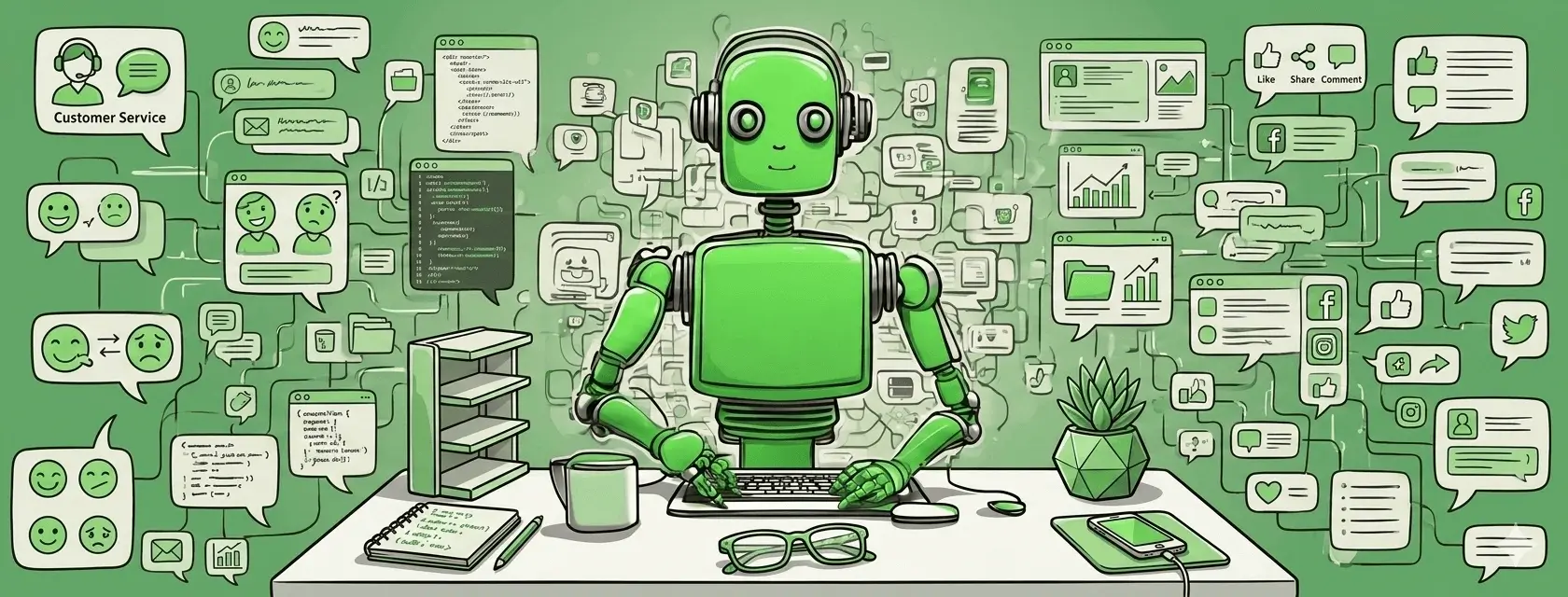
Cognitive search is not a single product. It's a capability that applies differently depending on where you deploy it. Here's how it plays out across key organizational functions.
Sales
Sales teams spend enormous amounts of time researching accounts before calls, updating CRM records after calls, and hunting for the right case study or competitive talking point. Cognitive search compresses all of this.
Before a discovery call, a rep can ask: "What do we know about Acme Corp, their history with us, their tech stack, recent news, and similar companies we've won?" The system returns a pre-call brief in seconds.
After the call, the rep can say: "Summarize key action items from my call notes and draft a follow-up email based on the objections raised." The system handles it.
In systems like Action Sync, this workflow becomes continuous — pre-call briefs, post-call summaries, objection tracking, and follow-ups are all generated from the same underlying knowledge layer. All without manual stitching across tools.
Pro Tip: Connect your cognitive search system to your CRM and your call recording tool before any other integrations. These two sources contain the highest-concentration tacit knowledge in your sales org.
Customer Support
Support teams live inside a brutal trade-off. Speed versus accuracy. Agents who go fast often give wrong answers. Agents who go slow frustrate customers.
Cognitive search breaks the trade-off. It gives agents instant access to the full resolution history for similar issues, the relevant documentation, and the customer's own history. All in seconds, not minutes. Agents get accurate answers fast.
Example: A fintech company deployed cognitive search across their support team. Average handle time dropped by 34 percent in the first 60 days. First-contact resolution improved by 22 percent. Not because the agents got smarter, but because they stopped wasting time searching.
HR and People Operations
New hire onboarding is one of the highest-leverage, most consistently broken processes in growing companies. New hires spend weeks figuring out where things live, who to talk to, how decisions get made.
A cognitive search system connected to your knowledge base, policy documents, org chart, and past project documentation can cut ramp time substantially. New hires can ask questions and get grounded answers immediately. All without interrupting colleagues.
Beyond onboarding, HR teams use cognitive search to ensure consistent policy application. When a manager asks "What's our parental leave policy for contractors in Ontario?" they get the right answer, not a general policy summary that may or may not apply.
Legal and Compliance
Legal and compliance teams deal with high-stakes questions that require precise, source-cited answers. They need to find the right version of the right document and know they're looking at the right one.
Cognitive search is particularly valuable here because it surfaces answers with citations. Every response includes a pointer to the specific source. This makes the answer auditable, which matters enormously in regulated environments.
A compliance officer can ask "What does our current data retention policy say about customer communications?" and get the specific policy clause, the document version, and the last date it was updated, in one response.
Engineering and Product
Engineers spend a surprising fraction of their time re-discovering decisions that were already made. Why was this architecture chosen? What did we decide about this API endpoint? What's the status of the dependency on Team X?
These questions are everywhere. They interrupt senior engineers. They slow down junior engineers. They create duplicated work.
Cognitive search indexed over your Jira backlog, Confluence wiki, architecture decision records, and Slack channels gives engineers an institutional memory that doesn't depend on who happens to be available to answer questions that day.

Common Misconceptions About Cognitive Search
A few misconceptions slow down adoption decisions. Worth clearing up.
"We need to clean up our data first." This is the most common blocker, and the most wrong. Cognitive search is built to work with messy, distributed, inconsistent data. You don't need a single source of truth. You don't need a clean taxonomy. Start with your data as it is.
"It's just a better search bar." Cognitive search is not search optimized. It's a different product category. The jump from keyword matching to semantic synthesis is comparable to the jump from a filing cabinet to a relational database. It's a different way of storing and accessing knowledge.
"AI will hallucinate and give wrong answers." This concern is legitimate but overstated when applied to well-designed enterprise cognitive search. Systems grounded in your actual data are answering from your documents, not generating from scratch. Source citations let you verify every answer. The risk of hallucination in well-implemented enterprise systems is significantly lower than the risk of your current team giving wrong answers due to incomplete information.
This is also how enterprise AI search providers like Action Sync reduce hallucination risk. By grounding every response in your organization’s data and providing clear source attribution for every insight.
"Employees won't use it." Adoption is real, but it's a behavior change challenge, not a capability gap. Systems that are fast, accurate, and embedded into existing workflows (Slack, email, internal dashboards) get used. Systems that require employees to visit a separate application and learn a new interface often don't. Integration into daily tools is not a nice-to-have. It's the adoption strategy.
FAQs or Frequently Asked Questions
Q: What is cognitive search?
Cognitive search is an AI-powered search technology that understands the intent behind a query, not just the keywords. It uses natural language processing (NLP), semantic understanding, and machine learning to retrieve, analyze, and synthesize information from multiple data sources—delivering direct answers instead of a list of documents.
Q: What is the difference between cognitive search and traditional search?
Traditional search relies on keyword matching and returns a list of documents. Cognitive search uses AI to understand intent, analyze context, and deliver synthesized answers from multiple sources. It also learns over time and adapts results based on user behavior and role.
Q: Where is cognitive search used?
Cognitive search is used across multiple business functions, including sales (account insights and call summaries), customer support (faster issue resolution), HR (onboarding and policy access), legal (document retrieval with citations), and engineering (knowledge discovery and decision tracking).
Q: Why is cognitive search important for organizations?
Cognitive search is important because it helps organizations access and use their internal knowledge faster. Instead of manually searching across multiple tools, teams can get instant, context-aware answers. Thus, leading to faster decisions, reduced duplication of work, and improved productivity.

Conclusion
The organizations that are building durable competitive advantages right now are not the ones with the most data. They're the ones that can access and use their data the fastest.
Cognitive search is infrastructure for that speed. It's not a search feature. It's the intelligence layer that sits between your people and your organization's knowledge, and makes both more useful.
We are early in this shift. Most organizations are still running on keyword search and hoping people will figure out the rest. A small but growing number are deploying cognitive search and discovering that knowledge accessibility is a competitive variable they didn't know they had.
The question for leaders is not whether this technology will matter. It already does. The question is whether you'll build this capability before your competitors do, or after.
Your organization generates knowledge every day. In meetings, in client calls, in experiments, in decisions made and documented and then forgotten. Cognitive search is what turns that accumulated knowledge into a living asset. This is something your entire organization can access, use, and build on.
The companies that get this right won't just find information faster. They'll make better decisions. They'll learn from their own history. They'll stop reinventing wheels. And they'll move faster than organizations that are still running on a search bar built for a simpler world.
Ready to see what cognitive search looks like inside your real workflow?
👉 Book a demo of ActionSync and explore how AI-powered knowledge retrieval works across your actual tools and data.